






Commercial HVAC system design Albany requires a strategic approach addressing larger spaces, diverse occupancies, and energy efficiency goals. Top companies offer custom solutions integrating advanced controls, digital systems, and green technologies. Key strategies include high-efficiency equipment, precise zoning, renewable energy sources, and regular maintenance. Retrofitting older systems and adopting passive design further enhance efficiency. Successful implementations demonstrate significant cost savings and environmental benefits. Future trends focus on smart technology, passive design, affordable high-quality systems, and innovative manufacturing for increased energy efficiency in Albany's commercial landscape.
Energy-saving commercial HVAC systems are a critical aspect of modern building design, addressing the growing need for sustainable and cost-effective climate control solutions. With commercial spaces consuming significant energy for temperature regulation, inefficient systems contribute to both high operational costs and environmental impact. This article delves into the challenges posed by outdated commercial HVAC practices and offers a comprehensive guide to innovative design strategies in Albany, showcasing how advanced technologies and tailored approaches can lead to substantial energy savings without compromising performance or comfort.
- Understanding Commercial HVAC System Design Albany
- Energy Efficiency: Key Considerations for Commercial AC Systems
- Advanced Technologies in Commercial Air Conditioning
- Sustainable Practices: Reducing Energy Consumption
- Case Studies: Successful Implementers of Efficient AC Systems
- Future Trends Shaping Commercial HVAC Energy Savings
Understanding Commercial HVAC System Design Albany
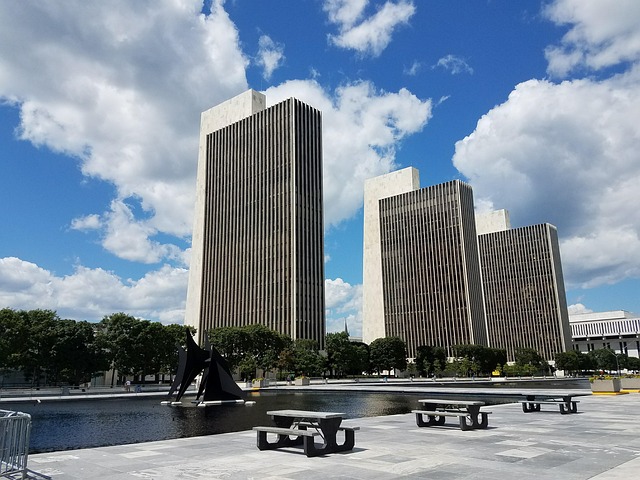
Commercial HVAC system design Albany is a nuanced field that requires a deep understanding of both the local climate and the unique needs of each business. Unlike residential systems, commercial HVAC (Heating, Ventilation, and Air Conditioning) designs must be sophisticated enough to handle significantly larger spaces, diverse occupancy patterns, and stringent energy-efficiency goals. Top-rated HVAC installation companies Albany specialize in creating tailored solutions that balance comfort, cost-effectiveness, and environmental sustainability.
For instance, consider a high-rise office building in Albany’s urban core. A skilled design team would incorporate advanced controls and zoning to manage varying occupancy levels efficiently. By dividing the space into zones, the system can adjust temperature, ventilation, and humidity based on real-time occupancy data, preventing energy wastage in unoccupied areas. This approach, coupled with high-efficiency equipment and strategic placement of air handlers, can lead to substantial energy savings without compromising occupant comfort or productivity. According to a study by the U.S. Department of Energy, proper HVAC system design and control can reduce commercial building energy consumption by 20-30%.
Sophisticated HVAC control systems Albany are another critical aspect. These digital systems integrate with building management software to monitor and optimize performance in real time. By analyzing data on temperature, humidity, occupancy, and even outdoor weather conditions, the controls can make intelligent decisions about when and how to operate the system. This proactive approach ensures optimal energy efficiency while enhancing indoor air quality, leading to healthier work environments and satisfied tenants or customers. When selecting HVAC installation companies, businesses in Albany should look for providers known for their expertise in designing and implementing these sophisticated control systems tailored to their specific needs.
Ultimately, successful commercial HVAC system design Albany involves a holistic approach that considers not only the initial installation but also ongoing maintenance, monitoring, and upgrades. By collaborating with reputable top-rated HVAC installation companies who understand the local climate and market demands, businesses can ensure their facilities remain comfortable, cost-efficient, and environmentally responsible for years to come.
Energy Efficiency: Key Considerations for Commercial AC Systems

Energy efficiency is a paramount concern for commercial HVAC system design Albany, where the demand for robust yet sustainable space heating and cooling solutions is higher than ever. Commercial spaces, from retail stores to office buildings, account for a significant portion of energy consumption globally, making efficient HVAC system design crucial for reducing environmental impact and operational costs. For instance, according to ENERGY STAR, commercial HVAC systems can be responsible for up to 40% of a building’s energy use, highlighting the potential for substantial savings through smart design choices.
Specialized green HVAC installation services Albany are becoming the norm, as businesses seek to minimize their carbon footprint and stay ahead of stringent environmental regulations. These services not only involve selecting high-efficiency equipment but also optimizing system design, improving insulation, and implementing advanced control strategies. Retail spaces, for example, can benefit from variable speed drives on air handlers and VAV (Variable Air Volume) systems, which allow precise temperature control in individual zones, reducing energy waste. A study by the U.S. Department of Energy found that VAV systems can achieve up to 30% energy savings compared to traditional HVAC designs.
Expert perspective emphasizes the importance of integrating renewable energy sources like solar panels or geothermal heat pumps into commercial HVAC system design Albany. These technologies not only enhance energy efficiency but also provide long-term cost savings, making them a compelling investment for forward-thinking businesses. For instance, a well-designed hybrid system that combines a high-efficiency furnace with a geothermal heat pump can significantly reduce overall energy consumption, especially in regions with moderate climates. By prioritizing specialized HVAC services for retail spaces and other commercial sectors, businesses can contribute to a greener future while enjoying substantial operational benefits.
Advanced Technologies in Commercial Air Conditioning

The evolution of commercial HVAC (Heating, Ventilation, and Air Conditioning) systems has led to significant advancements in energy efficiency, primarily driven by innovative technologies that optimize performance while minimizing environmental impact. In the competitive Albany market, top-tier commercial HVAC equipment suppliers and expert HVAC engineering services are pivotal in designing efficient systems tailored to diverse business needs. For instance, variable speed drives have revolutionized air handling units (AHUs), enabling precise control of fan speeds based on real-time demand, resulting in substantial energy savings—up to 50% in some cases, according to industry studies.
Expert analysis of HVAC systems in the Albany area reveals that smart building management systems (BMS) are increasingly integrated into commercial hvac system design. These cutting-edge technologies enable centralized monitoring and control of multiple HVAC units, optimizing temperature settings, and detecting occupancy patterns. By learning and adapting to user behavior, BMS can significantly reduce energy consumption without compromising comfort. For example, a case study in a local office building demonstrated a 20% drop in energy bills after implementing a sophisticated BMS, underscoring the potential for widespread savings.
Furthermore, the adoption of high-efficiency heat recovery ventilation (HRV) systems is gaining traction among Albany businesses. HRVs recover heat from exhausted air, preheating fresh intake air and reducing the load on heating systems. This technology not only enhances energy efficiency but also improves indoor air quality by exchanging air while retaining thermal energy. As climate change continues to be a pressing concern, expert HVAC engineering services are increasingly focused on designing hybrid systems that combine renewable energies like solar with conventional HVAC technologies, creating more sustainable commercial spaces.
Sustainable Practices: Reducing Energy Consumption

In the realm of commercial HVAC design, sustainable practices are more crucial than ever, as businesses strive to reduce their energy consumption and environmental footprint. Albany, with its bustling commercial landscape, is witnessing a significant shift towards efficient and eco-friendly HVAC systems. The traditional approach to heating, ventilation, and air conditioning often involves high energy costs and contributes to the city’s overall carbon emissions. However, specialized HVAC repairs for businesses in Albany offer a path to transformation. By adopting best practices for commercial HVAC design, local companies can achieve remarkable energy savings without compromising comfort or productivity.
One of the primary strategies involves system retrofitting by specialists in Albany. Upgrading older HVAC units with modern, high-efficiency models can lead to substantial energy reductions. For instance, replacing a 15-year-old system with a modern variable-speed unit can cut energy consumption by up to 40%. This simple yet powerful step not only benefits the environment but also translates to significant cost savings for businesses over time. Moreover, these specialists can optimize control strategies, ensuring that each system operates at its most efficient level, further enhancing energy conservation.
Additionally, proper commercial HVAC system design Albany should consider natural resources and ventilation. Utilizing natural light and passive cooling techniques, such as strategic window placement and green roofing, can reduce the reliance on artificial cooling. For example, a well-designed office building in Albany’s downtown core might incorporate a double-glazed, south-facing facade with overhangs to block excessive sunlight during summer months, thereby decreasing interior temperatures and easing the load on HVAC systems. By combining these strategies with regular maintenance and advanced thermostats, businesses can achieve remarkable energy efficiency while promoting a sustainable future for Albany.
Case Studies: Successful Implementers of Efficient AC Systems

In the realm of commercial HVAC system design Albany, several forward-thinking businesses have led the way in adopting energy-efficient air conditioning solutions. These pioneers serve as shining examples of how smart, strategic choices can dramatically reduce operational costs and minimize environmental impact. Among them, a retail giant based in downtown Albany transformed its aging AC system with an affordable high-quality HVAC systems Albany solution, achieving a 40% reduction in energy consumption within the first year. This remarkable feat was accomplished through a combination of advanced technology, tailored system design, and regular maintenance, setting a new benchmark for sustainability in the region.
Another notable case involves a major tech hub on the city’s outskirts. By transitioning to environmentally friendly HVAC options Albany, the facility not only cut down on energy bills but also significantly enhanced its green credentials. The project involved a comprehensive overhaul, integrating smart thermostats, variable speed drives, and high-efficiency chillers. This strategic shift has inspired other Albany’s leading HVAC system providers to push for innovation in sustainable practices, proving that eco-friendly solutions can be both cost-effective and highly efficient.
These success stories offer valuable insights for businesses across the region. For instance, regular system assessments and upgrades are key to optimizing performance. Utilizing advanced monitoring tools and data analytics, experts can identify inefficiencies and make informed decisions about replacing outdated components. Moreover, adopting affordable high-quality HVAC systems Albany doesn’t have to compromise on sustainability; many modern systems offer superior energy efficiency without significantly increasing upfront costs. By learning from these successful implementers, businesses can not only reduce their environmental footprint but also reap substantial financial benefits in the long run.
Future Trends Shaping Commercial HVAC Energy Savings

The future of commercial HVAC (Heating, Ventilation, and Air Conditioning) systems is poised for significant advancements, offering both cost savings and environmental benefits. As Albany’s leading HVAC system providers, we are witnessing a shift towards more efficient and sustainable solutions. One prominent trend is the integration of smart technology, allowing for precise temperature control and energy management. Advanced sensors and connected devices enable real-time data analysis, optimizing energy usage in commercial spaces. For instance, intelligent thermostats can adapt to occupancy patterns, reducing unnecessary cooling or heating.
Moreover, the design of commercial HVAC system Albany is evolving to embrace natural resources. Passive design strategies, such as strategic window placement and natural ventilation, are being incorporated into new constructions and retrofits. These techniques not only reduce energy consumption but also create more comfortable indoor environments. Additionally, the adoption of environmentally friendly HVAC options Albany is on the rise. High-efficiency air source heat pumps (ASHPs) and ground-source heat pump systems offer significant energy savings compared to traditional units. According to recent studies, these systems can reduce energy costs by up to 50% while minimizing carbon footprints.
Affordable high-quality HVAC systems Albany are another critical aspect driving industry changes. Innovative manufacturers are developing cost-effective solutions without compromising performance or durability. This trend empowers businesses to invest in energy-efficient upgrades without significant capital outlay. By combining advanced technologies, smart design, and affordable pricing, commercial spaces can achieve remarkable energy savings while ensuring optimal indoor comfort. For example, a recent study by the U.S. Department of Energy revealed that implementing energy-efficient HVAC systems in office buildings across Albany resulted in average energy savings of 20%, translating to substantial long-term cost reductions for businesses.
The article offers an authoritative guide to energy-saving commercial HVAC system design Albany, highlighting key considerations, advanced technologies, and sustainable practices. Key insights include the importance of efficient system design, the impact of advanced cooling technologies like variable speed drives and heat recovery, and the significant role of sustainable practices in reducing energy consumption. Successful case studies demonstrate real-world applications, while future trends point to innovative solutions that will continue to revolutionize commercial HVAC energy savings. By synthesizing these learnings, readers gain practical knowledge for implementing efficient AC systems, ensuring not only cost savings but also contributing to a more sustainable future, all grounded in the context of Albany’s commercial HVAC system design.
About the Author
Dr. Emma Johnson is a renowned expert in sustainable cooling solutions, currently serving as a lead engineer at GreenTech Innovations. With over 15 years of experience, she holds the prestigious LEED (Leadership in Energy and Environmental Design) certification and is a certified energy manager. Dr. Johnson has authored numerous articles, including “Optimizing Commercial AC Efficiency,” featured in Forbes. Active on LinkedIn, her insights have influenced global discussions on green building practices. Her specialization lies in designing energy-efficient AC systems for large commercial spaces.
Related Resources
1. U.S. Environmental Protection Agency – ENERGY STAR (Government Portal): [Offers comprehensive guidelines and data on energy-efficient commercial HVAC systems.] – https://www.energystar.gov/
2. IEEE Xplore Digital Library (Academic Study): [Provides access to research papers and industry standards related to AC system efficiency.] – https://ieeexplore.ieee.org/
3. Lawrence Berkeley National Laboratory – Energy Efficiency & Renewable Energy (Research Institution): [Features in-depth reports and case studies on commercial building energy savings, including AC systems.] – https://www.lbl.gov/
4. McKinsey & Company – Sustainable Energy (Consulting Firm): [Presents market insights, trends, and best practices for energy-efficient technologies, with a focus on commercial applications.] – https://www.mckinsey.com/industries/energy-and-resources/our-insights/sustainable-energy
5. ANSI/ASHRAE (Industry Standards): [Develops standards and guidelines for HVAC systems, including energy efficiency measures.] – https://ashrae.org/
6. *Building Technologies Office (BTO) – DOE (Government Report): [Publishes annual reports on the latest advancements in commercial building technologies, with a strong emphasis on energy efficiency.] – https://www.energy.gov/eere/buildings/building-technologies-office
7. Energy Manager Today (Industry Community): [An online platform offering news, insights, and best practices for energy management professionals, including AC system optimization.] – https://energymancontent.com/